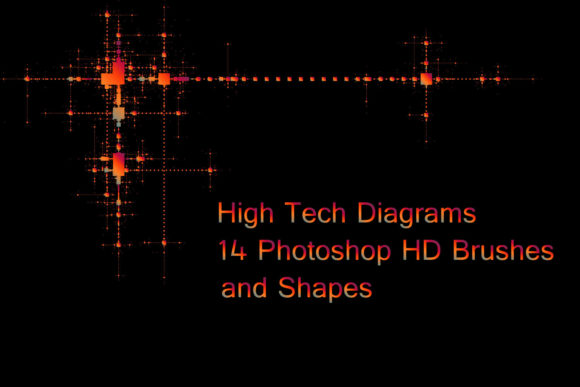
Elevating Digital Art with High-Tech Vector Diagrams and Brushes
In the rapidly evolving landscape of digital design, the difference between a good composition and a great one often lies in the details. Whether you are crafting a futuristic user interface, designing a sci-fi movie poster, or creating intricate infographics for a tech startup, the need for precise, scalable, and visually striking elements is paramount. This is where a comprehensive collection of Vector High Tech Diagrams becomes an indispensable asset for modern creatives. By leveraging files available in AI, EPS, and JPG formats, alongside specialized Photoshop resources, designers can inject a layer of professional sophistication into their work without getting bogged down in complex illustration from scratch.
The Power of Scalability in Technical Design
One of the most significant challenges digital artists face is maintaining image quality across different output sizes. A graphic that looks crisp on a smartphone screen might appear pixelated and amateurish when blown up for a large-format print or a high-resolution billboard. This is precisely why vector-based assets are the gold standard for technical diagrams. Unlike raster images, which are made of fixed pixels, vectors are defined by mathematical paths.
When you utilize Vector High Tech Diagrams AI files, you gain the freedom to resize any element infinitely. You can shrink a complex circuit board schematic down to an icon or expand a network node chart to cover an entire wall mural, and the lines will remain razor-sharp. There is absolutely no loss of quality, regardless of the scale. This flexibility is crucial for professionals who need to adapt a single design concept for multiple platforms, ensuring brand consistency and visual fidelity everywhere the artwork appears.
Beyond Vectors: The Role of HD Brushes and Textures
While vectors provide the structural backbone of high-tech designs, texture and depth bring them to life. Flat shapes can sometimes feel sterile or too clinical. To counter this, the inclusion of HD brushes for Photoshop allows artists to add grit, glow, and organic imperfections that mimic real-world technology. These brushes are essential for creating "amazing technology details" that make an artwork feel tangible and lived-in.
Imagine overlaying a clean vector grid with a subtle, brushed-metal texture or adding glowing energy trails to a data stream. These nuances transform a simple diagram into a compelling visual story. The combination of precise vector shapes with the artistic freedom of raster brushes creates a hybrid workflow that offers the best of both worlds: the editability of vectors and the rich texturing capabilities of Photoshop.
Unpacking the Toolkit: What's Inside the Archive?
A robust design resource should be more than just a few isolated images; it needs to be a complete ecosystem of tools that integrate seamlessly into your existing workflow. A high-quality pack typically includes a diverse range of file formats to ensure compatibility with various software versions and project requirements. Let's break down what a comprehensive set of 14 abstract hi-tech charts and associated assets usually entails and how each component serves a specific purpose.
- 1 Photoshop File (.CSH) with High Tech Graphs: Custom Shape files are a time-saver. Instead of drawing complex nodes and connectors manually, you can simply select the shape tool and click to place perfectly formed technical elements onto your canvas.
- 1 Photoshop File (.ABR): The brush file is where the magic of texture happens. These brushes allow for painting light leaks, holographic glows, and distressed metal effects directly onto your layers.
- 1 Photoshop Layered PSD File: For those who want to hit the ground running, a pre-composed PSD offers a ready-made scene. You can dissect the layers to understand how the effects were achieved or use it as a base for your own variations.
- 1 Big Transparent PNG File: Sometimes you just need a quick drag-and-drop solution. A high-resolution PNG with a transparent background is perfect for rapid prototyping or when working in software that doesn't support vectors.
- 1 Big JPG File: Useful for mood boards, references, or quick previews where file size matters more than transparency or scalability.
- 1 Vector EPS 10 File: The universal vector format. Vector High Tech Diagrams EPS files can be opened by almost any vector editing software, making them ideal for collaboration with clients or colleagues who may not use Adobe Illustrator.
- 1 Vector AI Illustrator 10 File: The native format for Adobe Illustrator. Working with Vector High Tech Diagrams AI ensures full access to anchor points, stroke properties, and advanced pathfinder operations for maximum customization.
The archive, often around 12.8 MB in size, is compact enough to download quickly yet dense with value. Compatibility is also key; ensuring these tools work with Photoshop CS3 and above means that even designers with older hardware or software setups can still access premium resources.
Integrating Assets into Modern Workflows
The true value of these assets shines when they are integrated into real-world projects. Consider the workflow of a UI/UX designer working on a dashboard for a fintech application. They need to visualize data flow, server connections, and security protocols. Using the 14 abstract hi-tech charts included in such a pack, they can rapidly mock up complex data visualizations. Because the files are vector-based, the designer can easily recolor every element to match the client's brand palette—switching from a cool cyber-blue to a corporate navy or an alert-system red with just a few clicks.
Similarly, motion graphics artists benefit immensely from these resources. Before animating a sequence, an artist needs static assets that are clean and well-organized. The layered PSD and vector files allow for easy separation of elements. A glowing line can be isolated and animated to pulse, while background grids can be parallaxed to create depth. The availability of JPG and EPS formats ensures that these assets can be imported into After Effects, Cinema 4D, or other 3D suites without compatibility errors.
Customization: Color, Size, and Style
Flexibility is the cornerstone of good design resources. A rigid asset that forces a specific color scheme or size limits creativity. With high-quality vector packs, you have total control. You can easily get any sign, graph, or diagram in any size and color without loss of quality. This level of customization is vital for maintaining design coherence.
For instance, if you are creating a series of posters for a technology conference, each speaker's session might require a different thematic color. With editable vector files, you can batch-process color changes or manually tweak individual nodes to differentiate sections while keeping the underlying geometric style consistent. This adaptability extends to line weight as well; you can thicken strokes for a bold, industrial look or thin them out for a delicate, schematic aesthetic.
Why Quality Matters in Tech Illustration
In industries like aerospace, medical technology, and software development, visuals are not just decorative; they are communicative. Poorly drawn diagrams can confuse users or undermine the perceived reliability of a product. High-definition brushes and precise vector shapes convey a sense of engineering precision and attention to detail. When a viewer sees clean lines, balanced proportions, and sophisticated textures, they subconsciously associate those qualities with the product or service being presented.
Furthermore, using professional assets saves time. Creating intricate circuit patterns or holographic interfaces from scratch can take hours of meticulous work. By utilizing a pre-made collection, designers can focus on the creative direction and storytelling aspects of their project rather than getting lost in the weeds of drawing individual components. This efficiency allows for faster iteration, meaning more concepts can be explored and refined before the final deadline.
Making the Right Choice for Your Project
When selecting resources for your next big project, consider the versatility of the file formats offered. A pack that only provides raster images might suffice for web-only projects, but it will fail you if the client requests a large print run. Conversely, a pack with only vectors might lack the textural depth needed for a cinematic key art piece. The ideal solution is a hybrid approach, offering Vector High Tech Diagrams AI, EPS, and JPG files alongside Photoshop-specific tools.
It is also worth noting the importance of community feedback. Resources that have been rated highly by other users often indicate reliability, ease of use, and high-quality organization. If a pack includes well-named layers, grouped vectors, and clear documentation, it reflects a creator who understands the needs of fellow designers. Taking a moment to rate and review these tools helps maintain a healthy ecosystem of shared knowledge and high standards within the creative community.
Ultimately, equipping yourself with a diverse set of high-tech diagrams and brushes is an investment in your creative potential. It empowers you to tackle complex visual challenges with confidence, knowing you have the right tools to execute your vision with precision and flair. Whether you are a seasoned veteran or an aspiring artist, these assets bridge the gap between imagination and realization, allowing you to create stunning, future-ready artwork that stands out in a crowded digital world.